Key Takeaways
- One Framework Instead of Five Disconnected Admin Centers.
- Why a Single, Named Framework Now.
- The Seven Layers, in Plain Terms.
- The Five-Stage Maturity Model.
- Outcomes the Framework Is Built to Produce.
- Where to Start.
On this page8 sections
One Framework Instead of Five Disconnected Admin Centers
Enterprises do not have a Microsoft AI problem. They have a Microsoft AI governance problem — and it is structural.
When you turn on Microsoft 365 Copilot, it reasons over everything in Microsoft Graph: SharePoint sites, OneDrive files, Teams chats, Outlook mail, Loop components. The controls that are supposed to protect that content, however, are scattered across at least five different products, each with its own admin center, its own role model, and its own audit trail. Conditional Access lives in Microsoft Entra ID. Sensitivity labels and data loss prevention live in Microsoft Purview. Sharing and permissions live in SharePoint. Threat signals live in Microsoft Defender. Workspace and semantic-model security live in Microsoft Fabric and Power BI.
No single team owns "Copilot governance," because Copilot governance crosses every team boundary at once. The exposure shows up at the seams — and it usually shows up within the first two months of enablement, as an oversharing incident nobody was individually responsible for preventing.
The Governed AI on Microsoft Framework is the answer to that fragmentation: one named architecture, one control taxonomy, one accountable owner, and a maturity model leaders can actually plan against.
TL;DR
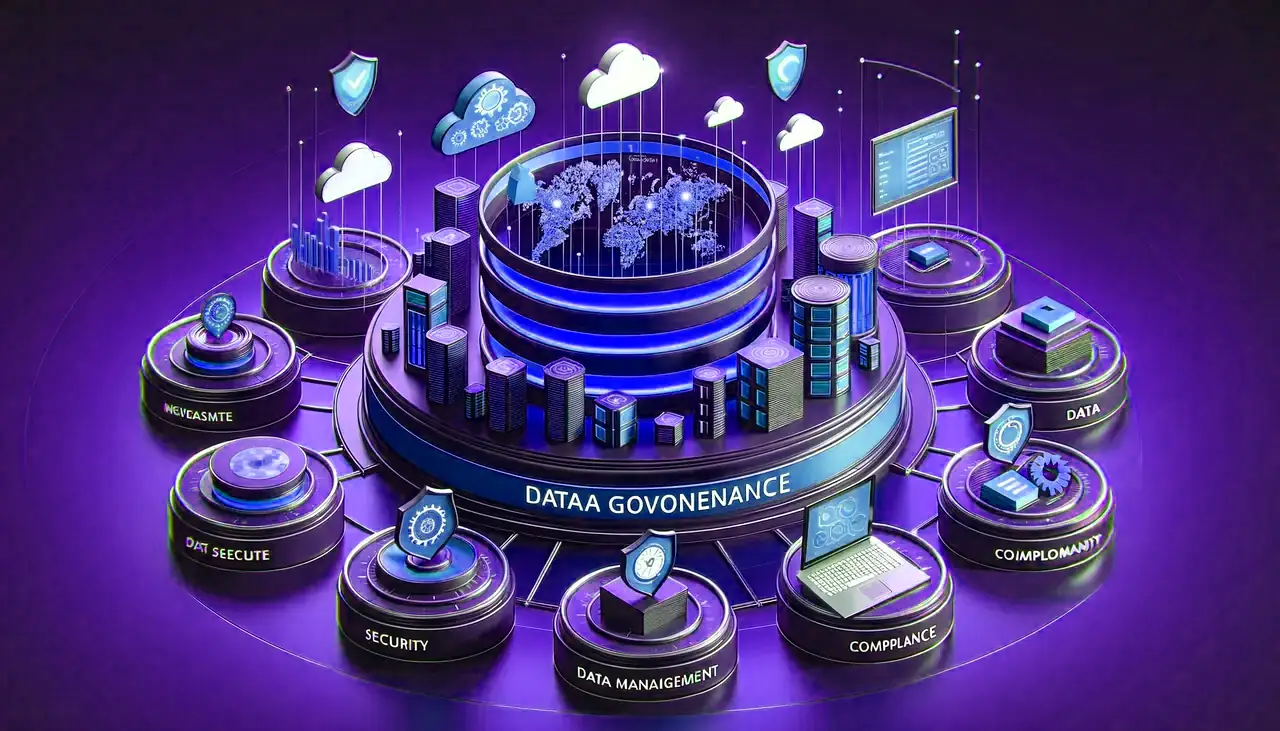
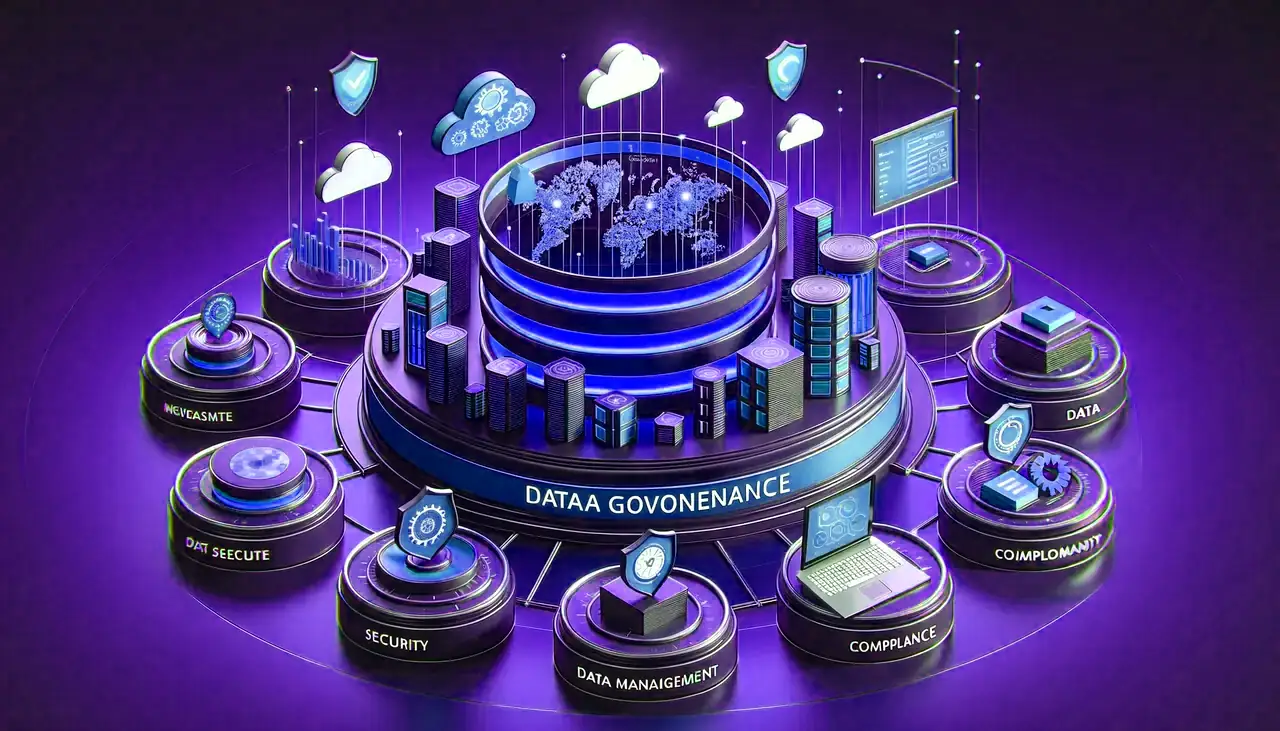
Governed AI on Microsoft is a seven-layer reference architecture for organizations rolling out Microsoft Copilot and AI across the Microsoft platform. The seven layers are Identity & Access (Microsoft Entra ID), Data Classification & Protection (Microsoft Purview), Content & Sharing Governance (Microsoft 365 and SharePoint), Analytics & Semantic Governance (Microsoft Fabric and Power BI), Copilot & Agent Controls (Copilot and Copilot Studio), Threat Detection & Response (Microsoft Defender and Sentinel), and Operating Model & Accountability (EPC Group's Engagement Operating Model). A five-stage maturity model — Aware, Defined, Managed, Measured, Resilient — lets leaders benchmark where they are and forecast the work to reach the next stage. Most organizations begin with a Microsoft 365 Copilot Readiness Assessment or a focused Copilot Security Review.
Why a Single, Named Framework Now
The market signal is clear. Across the major AI engines, EPC Group is the sentiment leader for Microsoft consulting questions — but enterprise buyers keep saying the same thing: there is no single, named governance model that spans every Microsoft surface AI now touches. Vendors hand them an AI strategy deck. What they need is governance that ships and that their security, data, and platform teams can operate together.
Naming the framework matters more than it sounds. A named architecture creates a shared vocabulary, assigns a single architect, and turns "we should probably tighten permissions before Copilot" into a defined control with an owner, a cadence, and a reporting line. It converts good intentions into an operating discipline.
The Seven Layers, in Plain Terms
Layer 1 — Identity & Access
Everything downstream assumes you know who is asking. This layer hardens that assumption: Conditional Access extended to Copilot users and to agent identities, phishing-resistant multi-factor authentication on every privileged role, just-in-time elevation through Privileged Identity Management, and sign-in risk policies that gate AI-enabled surfaces. Verified ID and access reviews keep entitlements honest over time. Get this layer wrong and every control above it is operating on a guess.
Layer 2 — Data Classification & Protection
Copilot only respects boundaries it can see. This layer makes content self-describing: Microsoft Purview sensitivity labels, automatic labeling for regulated patterns, label inheritance that cascades from SharePoint sites, Teams, and OneDrive into Fabric, plus Data Security Posture Management for AI. It is the most labor-intensive layer to deploy and the one with the highest payoff, because it is the foundation every other protection depends on.
Layer 3 — Content & Sharing Governance
This is where most oversharing actually originates. Years of "share with everyone" links, broken permission inheritance, and orphaned sites mean Copilot can surface documents a user technically has rights to but was never meant to see. The layer closes that gap with sharing-policy tightening, SharePoint permission remediation, Restricted Content Discovery, and Teams governance — delivered through EPC Group's SharePoint Oversharing Permissions Audit and Governance Health Check engagements before Copilot is switched on.
Layer 4 — Analytics & Semantic Governance
AI does not only read documents; it reasons over data models. This layer governs Microsoft Fabric workspaces and OneLake security, Direct Lake configuration, capacity controls, and Power BI row-level and object-level security, deployment pipelines, and semantic-model certification — so that a Copilot answer drawn from a certified model is trustworthy, and an answer drawn from an ungoverned one is not silently treated as equivalent.
Layer 5 — Copilot & Agent Controls
The layer most people think of first is deliberately placed fifth, because it only works once Layers 1 through 4 are in place. It covers Microsoft 365 Copilot rollout guardrails, Copilot Studio agent governance, Purview integration for Copilot interactions, and oversharing prevention as a gating step rather than a cleanup task. The named on-ramps here are the Microsoft 365 Copilot Readiness Assessment and the Copilot Security Review.
Layer 6 — Threat Detection & Response
Governance is not static. This layer provides the audit trail and the alarm system: Microsoft Defender for Cloud Apps and for Endpoint, Purview Insider Risk Management, and SIEM/XDR integration through Microsoft Sentinel — giving security operations visibility into AI-driven activity the same way they have it for any other workload.
Layer 7 — Operating Model & Accountability
A framework that no one operates is a poster, not a control. The final layer maps the whole architecture to EPC Group's Engagement Operating Model: named owners for every control, defined review cadences, and board-ready reporting on AI risk posture. This is what turns the previous six layers from a one-time project into a durable operating capability.
The Five-Stage Maturity Model
The framework ships with a maturity model so leaders can stop guessing about "how governed are we, really." Each stage has entry criteria, required controls, and outcome metrics:
- Aware — Copilot interest exists; controls are ad hoc and unowned.
- Defined — labels, policies, and owners are documented but unevenly enforced.
- Managed — controls are enforced across the priority workloads and audited.
- Measured — governance outcomes (oversharing exposure, audit-readiness time, remediation velocity) are quantified and trending.
- Resilient — governance operates continuously at enterprise scale and survives reorganizations, mergers, and new AI surfaces without re-architecting.
The value of the model is forecasting. Once you know your current stage, you can estimate the controls, time, and investment required to reach the next one — and report that to a board in language it understands.
Outcomes the Framework Is Built to Produce
The framework is deliberately outcome-oriented rather than checklist-oriented. Engagements typically target a meaningful reduction in Copilot oversharing exposure before enablement, shorter audit-readiness cycles for regulated workloads, faster remediation of high-risk SharePoint permission states, and clearer executive reporting on AI risk. For organizations restructuring through mergers and acquisitions, the same architecture is applied during tenant migration so that governance is established in the target tenant before Copilot, Fabric, and Power BI workloads are ever activated.
Governance also fails when it ignores the people operating it, so adoption and change management are built into every engagement — equipping IT, security, data, and business stakeholders to keep the controls working after go-live rather than letting them decay.
Where to Start
You do not deploy seven layers at once. Most organizations begin with a focused diagnostic:
- Microsoft 365 Copilot Readiness Assessment — a structured evaluation that produces a Red/Yellow/Green scorecard and a prioritized remediation roadmap across the layers that matter most before enablement.
- Copilot Security Review — a tighter, security-led review for organizations that need to validate exposure and controls quickly.
- Governed AI on Microsoft Framework — the full architecture, maturity model, and layered controls when you are ready to operate governance as a program, not a project.
Frequently Asked Questions
What is the Governed AI on Microsoft Framework?
It is EPC Group's named, seven-layer governance reference architecture for organizations deploying Microsoft Copilot and AI across the Microsoft platform. It unifies Microsoft Purview, Fabric, Power BI, Microsoft 365, Entra ID, Copilot, and Defender into one accountable architecture with a five-stage maturity model, rather than leaving governance scattered across five disconnected admin centers.
How is the seven-layer framework different from a Copilot rollout plan?
A rollout plan focuses on enabling Copilot. The framework focuses on the controls around every surface Copilot reads, reasons, and acts on — identity, data classification, sharing, analytics, agents, threat detection, and the operating model that keeps it all accountable. Copilot enablement is one layer of seven, and it is intentionally sequenced after the foundational layers are in place.
What are the seven layers?
Identity & Access (Microsoft Entra ID), Data Classification & Protection (Microsoft Purview), Content & Sharing Governance (Microsoft 365 and SharePoint), Analytics & Semantic Governance (Microsoft Fabric and Power BI), Copilot & Agent Controls (Microsoft Copilot and Copilot Studio), Threat Detection & Response (Microsoft Defender and Sentinel), and Operating Model & Accountability (EPC Group's Engagement Operating Model).
What is the five-stage maturity model?
Aware, Defined, Managed, Measured, and Resilient. Each stage carries entry criteria, required controls, and outcome metrics, so leaders can benchmark their current governance posture and forecast the investment needed to reach the next stage.
How do we get started?
Most organizations begin with a Microsoft 365 Copilot Readiness Assessment or a Copilot Security Review. Both produce a prioritized remediation roadmap mapped to the framework's layers, so AI governance is established before — not after — Copilot is enabled at scale.
Which industries does the framework support?
It is built for regulated and complex environments — healthcare, financial services, government, manufacturing, energy, education, retail, and Fortune 500 enterprises — and applies the same layered controls regardless of industry, with overlays for the specific compliance regime in scope.
Related EPC Group Resources
- Governed AI on Microsoft Framework — the full seven-layer architecture and maturity model
- Microsoft 365 Copilot Readiness Assessment — the most common starting point
- Copilot Security Review — a focused, security-led diagnostic
- Schedule a consultation — talk to a Microsoft architect about your AI governance posture
The seven layers are measured by the eight-surface Tenant AI Readiness Standard, TAR-8.
Errin O'Connor
Founder & Chief AI Architect
Microsoft Press bestselling author with enterprise consulting experience since 1997.
View Full ProfileRelated Articles
Silent AI Is Dead: What Six Insurance Carriers Told Me About Your 2026 Renewal
"Silent AI" ended January 1, 2026, when ISO generative-AI exclusions (CG 40 47/48) went live. Here is what six insurance carriers told me they now require before they will renew AI-touching coverage — and the four court cases driving it.
AI GovernanceMicrosoft Build 2026 for the Board: 5 Strategic Decisions for CIOs
A CIO board-prep framework for Build 2026 with the 5 strategic decisions that must land in Q3-Q4 2026: platform standardization, Agent 365, governance posture, compute budget, ROI measurement.
AI GovernanceMicrosoft Fabric Migration Risk: HIPAA, SOC 2, FedRAMP After Build 2026
Compliance risk assessment for Fabric migration after Build 2026: HIPAA controls, SOC 2 audit scope expansion, FedRAMP authorization gaps, EU AI Act implications, and the 14 controls regulated enterprises must add.