EPC Group — founded in 1997, headquartered in Houston, a Microsoft Solutions Partner holding all six solutions designations — publishes this checklist; every price in it is Microsoft's published price.
By Errin O'Connor · Founder & Chief AI Architect, EPC Group · 12-minute read
Last updated by Errin O'Connor, Founder & Chief AI Architect, EPC Group
Related guide: Copilot in SharePoint Reaches General Availability: What Changes for Tenant Admins on November 1, 2026
Two changes in ten days
For two years the standard advice for Copilot readiness in SharePoint was about permissions: fix oversharing before you switch Copilot on. That advice stands. But two September 2026 changes move the frontier from who can see what to what Copilot understands and what it should stop seeing.
Change 1 — Copilot uses your library metadata (roadmap ID 516044, launched September 22, 2026). Microsoft's semantic-index documentation now states that when a user attaches a SharePoint document library or folder — or pastes its URL — into a Copilot prompt, “the grounding step includes that scope and uses the library's column metadata alongside file content to constrain and rank results.” Column values such as Document Type = Contract, Region = EMEA or Status = Approved become ranking signals for scoped questions. Libraries with meaningful, populated columns will answer better than libraries with the same files and empty columns. Companion features in the same wave: a site-level view of which documents and pages users reach through Copilot (roadmap 480725, rolling out), and Copilot in SharePoint itself, which is on by default for licensed users and can now create a library from a description — generating the name, description and a metadata schema with AI-powered columns that auto-tag new files — as well as build views and set up library rules from natural language.
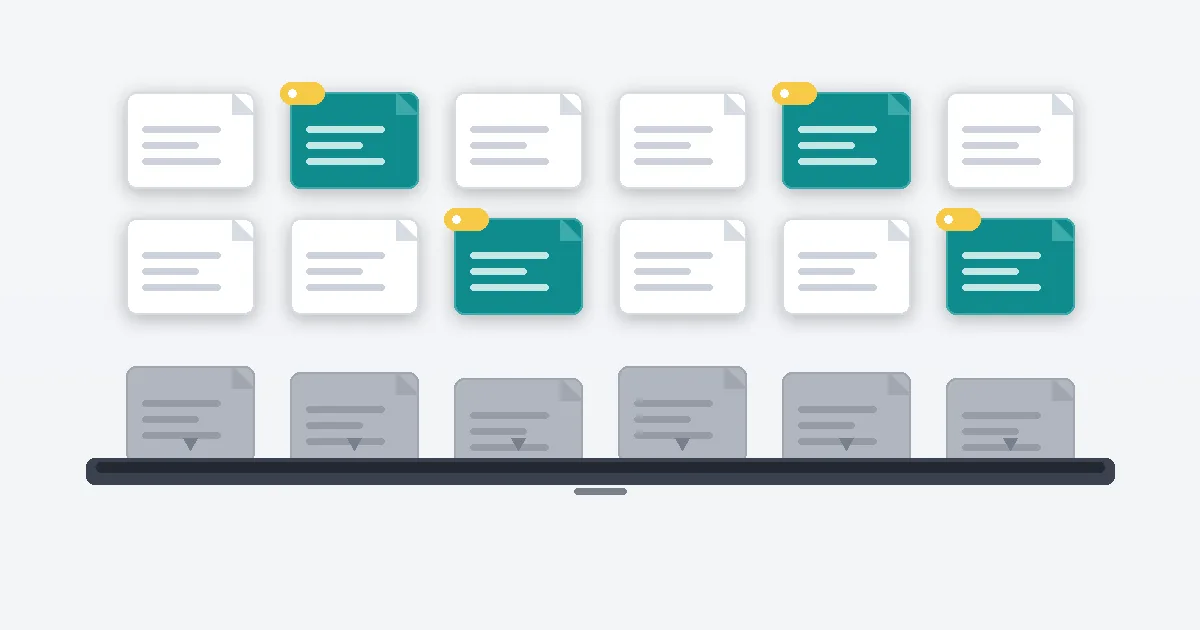
Change 2 — Purview can archive SharePoint files out of Copilot's reach (MC1472601, published September 15; roadmap 562345). Purview Data Lifecycle Management is adding an archive action to retention policies and retention labels. Inactive SharePoint files that meet the policy's age condition move to Microsoft 365 Archive while remaining under retention and legal hold; they stay available to eDiscovery and content search but are excluded from Microsoft 365 Copilot indexing. Rollout runs from early October to early November 2026. The action is not enabled by default — existing policies do not archive anything until an administrator edits them — and file-level archive requires a Microsoft 365 E5 license, with pay-as-you-go billing set up for Microsoft 365 Archive to realize the storage saving (retention settings, Microsoft Learn).
Put the two together and the governance picture for the next quarter is clear: the content Copilot should use needs metadata; the content it should not use needs a lifecycle policy that removes it from the index without deleting it.
Why this is a storage story as well as an AI story
Microsoft prices Microsoft 365 Archive storage at $0.05 per GB per month against $0.20 per GB per month for standard SharePoint storage. Archived content still counts toward total tenant storage but is reclassified from active to archived, and a tenant is over quota only when active storage exceeds the limit (Microsoft 365 Archive FAQ). For the many organizations paying storage overage, a retention policy with the archive action does three things at once: it lowers the active storage bill, it keeps compliance intact (Purview features continue to operate on archived content, including holds), and it shrinks the corpus Copilot reasons over to the content that is current. Microsoft's own Copilot-readiness guidance for SharePoint Advanced Management lists archiving as a readiness step precisely because “Copilot isn't trained on archived content.”
The September 2026 SharePoint governance checklist
Ten items, in the order that pays back fastest. Items 1–4 are about answer quality; 5–8 about exposure and cost; 9–10 about proving it worked.
1. Rank your libraries by Copilot value, not by size. Pull the site and library inventory (SharePoint admin center, or the Copilot in the admin center query “show sites with the most Copilot activity” once usage insights land). The 30 to 50 libraries that hold contracts, policies, SOPs, project deliverables and client records are where metadata investment changes answers.
2. Define a minimum metadata standard for those libraries. Three to five managed columns per library — typically Document Type, Business Owner or Department, Status or Lifecycle Stage, Effective/Review Date, and a Region or Client where relevant. Use managed metadata term sets for anything shared across sites so values are consistent, because Copilot ranks on the values it finds.
3. Backfill with Copilot in SharePoint, then govern the prompts. Copilot in SharePoint's AI-powered columns use the Autofill capability to extract values from documents as they are added, and the first time you use it in a library it proposes up to three columns from the files already there. Use it to backfill, but review the column prompts: they are the rules that will tag the next ten thousand documents.
4. Teach the scoped-prompt pattern. The metadata benefit applies to queries scoped to a library or folder in the web experience. Publish two or three example prompts per key library (“Using the Contracts library, list agreements with Status = Active expiring before March”) in the site's home page. Unscoped tenant-wide prompts do not get the same ranking benefit.
5. Run the oversharing pass before any of this. Data access governance reports, restricted access control and restricted content discoverability in SharePoint Advanced Management — included with a Microsoft 365 Copilot license — remain the first gate. Better-ranked answers from over-shared libraries are a worse outcome, not a better one.
6. Turn on an inactive-site policy and a site attestation policy. Site lifecycle management (also in SharePoint Advanced Management) finds inactive and ownerless sites and asks owners to confirm necessity, owners, and sharing settings. Inactive sites are the first archive candidates and the most common source of stale answers.
7. Add the archive action to the right retention policies — and only those. Edit the retention policies or labels that already govern aging content (project archives, closed matters, superseded policies) to include Archive retained items in secure and compliant Microsoft 365 Archive to reduce cost, choosing whether the archive clock starts at creation or last modification. Do not add it to policies covering current operating content. Remember it requires E5 for file-level archive, is off until you edit the policy, and event-based retention is not supported for file-level archive.
8. Set up Microsoft 365 Archive billing and confirm the storage reclassification. Configure the pay-as-you-go billing policy in the Billing node, enable Archive in the SharePoint admin center, and after the first policy run confirm in storage reporting that active storage fell and archived storage rose by the same amount. Versions archive with the file and restore with it.
9. Measure what Copilot actually touches. When site-level usage insights arrive (roadmap 480725), pair them with the Copilot analytics in Viva Insights to answer two questions per key library: are people reaching the right documents through Copilot, and are they reaching documents that should have been archived.
10. Write the standard down. A one-page SharePoint content standard — required columns, lifecycle stages, when a library qualifies for archive — is the artifact that makes items 1–9 repeatable when the next twenty sites are created by Copilot in SharePoint from a sentence.
What not to do
- Do not bulk-archive to “clean up” Copilot. Archived sites are inaccessible to users until reactivated; archiving an active site to hide it from Copilot breaks the people who use it. Use restricted content discoverability for that.
- Do not delete versions to save storage before you archive. Versions archive with the file. Trim versions where policy says so, not as a storage shortcut.
- Do not let Copilot in SharePoint create libraries without a metadata standard. It will create clean, well-tagged libraries whose columns differ from every other library, and cross-site answers will suffer.
Frequently asked questions
Frequently Asked Questions
No. Microsoft documents the metadata understanding for queries scoped to a specific library or folder, on the web experience. Tenant-wide prompts rely on the semantic index and file content.
Where EPC Group fits
EPC Group has delivered 6,500+ SharePoint implementations since 1997 and 300+ Microsoft Copilot initiatives (rollouts and readiness assessments). The metadata standard, the oversharing pass and the archive policy design are three of the eight surfaces in our Microsoft 365 Tenant AI Readiness — 8-Surface Standard, delivered through the Copilot Readiness Assessment. If your libraries are large and your columns are empty, the September changes are an argument for fixing the columns before you buy more Copilot seats; the wider SharePoint consulting practice carries the metadata and lifecycle work from there.
Sources
- Semantic indexing for Microsoft Copilot — scoped queries with SharePoint libraries and folders (Microsoft Learn)
- Microsoft 365 Roadmap 516044 — Microsoft Copilot (Microsoft 365): Metadata understanding support for queries scoped to SharePoint document libraries or folders (Microsoft; status Launched)
- Microsoft 365 Roadmap 480725 — SharePoint: AI citations analytics for documents and pages (Microsoft; status Launched)
- Microsoft 365 Roadmap 562345 — Microsoft Purview: Archive SharePoint files under retention policies (Microsoft; status In development)
- What's New in Copilot in SharePoint: September 2026 (Microsoft Tech Community, 2026-09-02)
- Create a document library with AI — Copilot in SharePoint (Microsoft Learn)
- MC1472601 — Microsoft Purview: Archive SharePoint files under retention policies (Message Center, 2026-09-15)
- Common settings for retention policies and retention label policies — Archiving retained SharePoint files (Microsoft Learn)
- Frequently asked questions about Microsoft 365 Archive (Microsoft Learn)
- Get ready for Microsoft 365 Copilot and agents with SharePoint Advanced Management (Microsoft Learn)
- Copilot skills in the SharePoint admin center (Microsoft Learn)
- SharePoint storage planning (Microsoft Learn)
Primary sources
- Semantic indexing for Microsoft Copilot — Microsoft Learn — scoped queries use library column metadata
- MC1472601 — Archive SharePoint files under retention policies — Message Center, 2026-09-15
- Retention policy settings — archiving retained SharePoint files — Microsoft Learn — off by default; E5 for file-level archive
- Microsoft 365 Archive FAQ — Microsoft Learn — $0.05 vs $0.20 per GB per month; active vs archived storage
- Get ready for Copilot with SharePoint Advanced Management — Microsoft Learn — archiving as a readiness step