

The term Digital Transformation refers to the process of integrating digital technology and tools into all sectors of business which fundamentally alters the method in which organizations operate and provide better experiences to their customers. The concept also encompasses the cultural change that a company undergoes to continuously challenge the traditional operational norms and get comfortable with changes.
Discussion on the future of Digitalisation:
Against the backdrop of the coronavirus pandemic, the world was forced to adopt a digital transformation plan, tools, and technologies to keep the industrial sectors afloat. Even though this accelerated integration of digitalization in the traditional operative structure seemingly seemed successful, it still requires certain changes and improvements that can later elevate the industrial working pattern in the digital sector. One of the most crucial trends in this digital integration has been the performance of industrial and business operations from remote locations.
While the concept of remote operation was available to organizations before the pandemic, the strict health guidelines converted this concept into a practical reality. The future of Digital Transformation consists of some crucial aspects.

These can be categorized into the following:-
- The access to remote operations is expected to be enhanced.
- The concept of employee well being is expected to become an organisational priority.
- Digital twin computing capacity may enable predictive analytics.
- No code platforms may develop to help anyone in creating business applications with ease.
- Quantum and edge computing is expected to ring in a new era in digital transformation.
- All photonics networks are expected to make the end-to-end transmission of information possible. This transmission between the terminal and server will help in creating a technologically sustainable environment.
Read top 50 Digital Transformation Statistics and Trends
Current trends influencing Digital Transformation:
The pandemic proved to be devastating for several organizations as their business collapsed. But, on the other hand, the crisis also accelerated the adoption of technology within various industries across the globe. The major integration of technology into the traditional business structures has led to the rise of certain trends that have the potential of dictating the future of Digital Transformation.
These trends can be enumerated in the following manner:-
5G becoming the reality
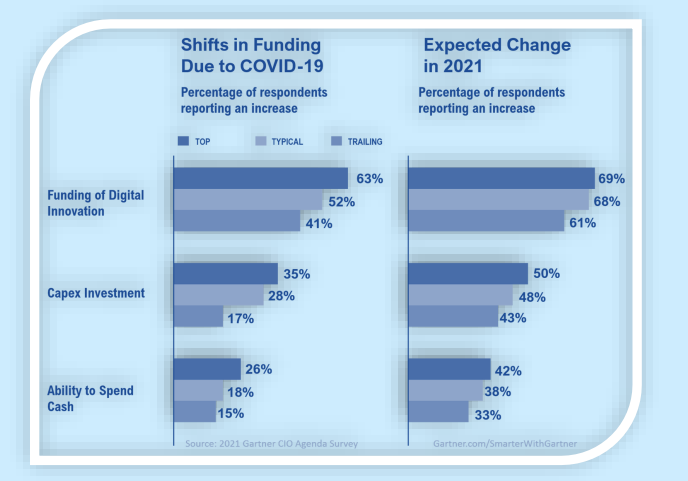
In the post-pandemic world, work in the digital platform has become the new normal, and organizations are increasingly attempting to operate their business from remote environments. While the concept of 5G had been in discussion in the past year itself, it is expected to become a technological prominence. As this network is expected to provide unprecedented speed and connectivity to the users, it is capable of providing a reliable connection. The mainstreaming of 5G connectivity can enhance the user experience and improve the process of Digital collaboration which subsequently will accelerate the digital transformation.
Blockchain development
The rapid technological advancement in the wake of COVID-19 has brought the concept of blockchain to the limelight. While the concept has emerged from the understanding of cryptocurrency, it is increasingly being adopted and implemented in several other industries especially into the structure of financial institutions. The capabilities of the Blockchain are continually being contemplated by organizations all over the world. It is expected that Blockchain might play a crucial role in cybersecurity and might be increasingly used in industries in the future.
Prioritization of Cybersecurity
The pandemic led to a major shift of business from the traditional forms of business into the digital platform. This resulted in the increased use of vulnerable data among organizations. In addition to this, consistent cyber attacks on organizations across the globe have brought the concept of cybersecurity into the limelight. It is becoming a very crucial issue for companies across the globe. The increasing investment in cybersecurity is a future trend within Digital Transformation.
Transformation to Digital Banking
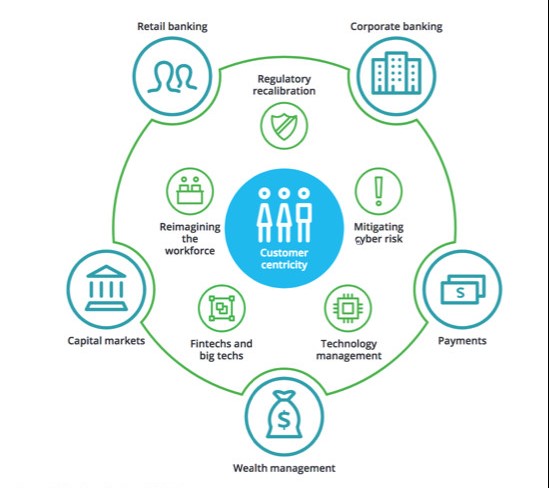
The finance and banking sector’s digital transformation was the most affected among the industries during the pandemic. The strict government guidelines forced the banking sector to provide most of its important services through the digital platform. The increasing adoption of Digital Transformation can be expected within this sector to improve the digital banking processes and enhance customer experiences.
Growth of the multi-cloud system
In the post-pandemic world, organizations are increasingly moving to the cloud platform. This will inadvertently lead to the growth of the multi-cloud system. As the system has the potential to remove the common issues faced by providers and the vendor lock-ins, multi-cloud systems can be expected to flourish increasingly shortly and shape the process of Digital Transformation.
Read: How cloud computing affects Digital Transformation in industry.
Conclusion:
The Covid 19 pandemic has proven to become the necessary catalyst that altered the position of Digital Transformation from a mere concept for speculation to an essential reality that forced organizations across the globe into Digital Transformation Consulting and changing their traditional means of business. The post-pandemic industrial sector has proven the fact that companies need to have access to actionable insights in real-time to enhance their product and provide better customer experiences